
"coffee growing in South America"
2000 article(s) found

Effect of open source altitude of coffee bean flavor on coffee flavor
The influence of geographical location on the flavor of coffee beans is profound. All coffee grows in the tropics, and the altitude at which it grows has a profound effect on the taste of coffee. The tropical belt extends from 30 degrees north latitude to the equatorial regions of the southern mountains that produce the world's truly high-quality Arabica coffee. Central and South America, South Asia and some Pacific islands, south-central Africa is also the most important in the world.

Effect of coffee bean planting altitude on coffee flavor
The impact of location on coffee bean flavor is profound. All coffee is grown in the tropics, and the altitude at which it is grown has a profound effect on the taste of coffee. The equatorial regions of the tropical belt, which extends from 30 degrees north latitude to the southern mountains, produce the world's truly premium Arabica coffee. Central and South America, South Asia and some Pacific islands, South Central Africa is also the world's most important

Coffee: What is a "fine" and what is a "single"?
Professional coffee knowledge exchange More coffee bean information Please pay attention to coffee workshop (Weixin Official Accounts cafe_style) What is "fine" and what is "single product"? Coffee drinkers remained mostly refreshers throughout the long history of human consumption, and this use did not change until the second half of the 20th century. Because the economic level has improved and life has been driven

Panamanian Coffee Manor Flavor and Taste characteristics introduction to the planting Environment of Ireta Manor
Panama is located on the Panamanian isthmus in Central America, bounded by Colombia to the east, the Pacific Ocean to the south, Costa Rica to the west and the Caribbean Sea to the north. The territory is S-shaped to connect North and South America, and the Panama Canal connects the Atlantic and Pacific oceans from north to south. It is known as the bridge of the world. [5] Panama has a land area of 75517 square kilometers and a land length of 772km.
The Flavor characteristics of Coffee in Central America the name of coffee producing area and the flavor of coffee are introduced.
The flavor of Central and South American beans: generally speaking, the flavor is relatively regular. The Brazilian coffee is mellow and full-bodied, while the Costa Rican coffee is gentle and supple, with a blend of sour, sweet and chocolate aromas. Panamanian coffee has strong aromas of citrus, jasmine, peach and nectar, bright and changeable acidity, very similar to Yega Xuefei. Colombia (South America)

Peruvian organic coffee beans, a major coffee producer in western South America
Coffee origin: Peru (Peru) is also a major coffee producer. Up to 98% of Peruvian coffee is grown in forest areas, and most producers are small farmers. Peru has good economic conditions and a stable political situation, thus ensuring the good quality of coffee. However, there are many local problems, in addition to guerrilla warfare and drug trafficking, in the mid-1990s in the coastal areas

What is the effect of altitude on coffee flavor? Coffee bean flavor
The influence of geographical location on the flavor of coffee beans is profound. All coffee grows in the tropics, and the altitude at which it grows has a profound effect on the taste of coffee. The tropical belt extends from 30 degrees north latitude to the equatorial regions of the southern mountains that produce the world's truly high-quality Arabica coffee. Central and South America, South Asia and some Pacific islands, south-central Africa is also the most important in the world.

Introduction to Fine Coffee Producing Area: Coffee Bean Producing Area of Central and South America
Coffee beans are the main raw materials for making coffee, and the production areas of coffee beans are also relatively large. Some continents have written fewer. The following small series will introduce the five major coffee bean production areas in Central and South America. 1. Mexican coffee production is concentrated in the southern part of Guatemala, with mountains running through it on both east and west sides, making it ideal for coffee

The unique flavor of Panamanian coffee manor introduces the flavor and taste of Ireta Manor.
Central America is a long isthmus from northern Mexico to southern Colombia, connecting North and South America. Panama is located in the southernmost part of Central America, so the country runs from east to west, not from north to south as people think. This means that the coast of the Caribbean (Atlantic) is in its north, while the Pacific is in the south. So far, Panama also shares the Atlantic Ocean.

Coffee producing countries in Central and South America
1. Mexican coffee production is concentrated in the south near Guatemala, with mountains running through the east and west, making its mountains tilted, making it an ideal terrain for coffee cultivation. Coffee cultivation is still common. According to the order, the highland is classified into three kinds of high-yield coffee: Arudora, Prima, Rabad and Barnabad. Coffee beans range in size from medium to large grains, appearance,
What are the characteristics of Ecuadorian coffee producing areas? is the Ecuadorian coffee variety Arabica?
Professional coffee knowledge exchange more coffee bean information please follow the coffee workshop (Wechat official account cafe_style) front street-Ecuador Coffee introduction Ecuador is one of the few countries in South America that produces both Arabica coffee and robusta coffee. It is located between Colombia and Peru in South America.

Columbia Coffee Brand Medellin Medellin Coffee is Colombian Medellin Coffee good
Professional coffee knowledge exchange more coffee bean information please pay attention to the coffee workshop (Wechat official account cafe_style) Columbia Geography is located in the western part of South America, connected with Venezuela, Brazil, Panama, Ecuador and Peru, and is the only country in South America facing the Pacific Ocean and the Caribbean Sea to the east, with the Andes from south to north and the western coastal plain

Characteristics of coffee beans from three regions-Characteristics of coffee beans from Central and South America
Characteristics of coffee beans from three regions-Characteristics of coffee beans from Central and South America Arabica Arabica beans, world-famous blue mountain coffee, mocha coffee, etc., almost all Arabica species. Appearance: bean shape smaller, positive was long oval, narrow and tortuous cracks in the middle, beans back arc shape more flat, consistent size, uniform color luster. Origin: Arabica coffee

Bright taste of Panama Emerald Estate Coffee Flavor Mouth Features Variety of producing area Estate Introduction
Panama is located in Central America on the Isthmus of Panama, east of Colombia, south of the Pacific Ocean, Panama map of Panama west of Costa Rica, north of the Caribbean Sea. The territory is S-shaped connecting North America and South America, and the Panama Canal connects the Atlantic Ocean and the Pacific Ocean from north to south, known as the world bridge. [5]Panama has an area of 75517 square kilometers and a length of

Introduction to the mild taste of high-quality coffee beans in Peruvian coffee producing areas
In 1542, the Spanish royal family set up the Government House in Lima and established the Governor's District of Peru, which became the center of Spanish colonial rule in South America. At that time, Peruvian commerce was prosperous, merchants controlled most of South America's import and export trade, and the precious metals and other goods looted by the Spaniards from South America were shipped out of Peru. The colonists encroached on land in Peru, forced the Mita system, and forced the Indians to

Introduction to the Coffee growing Environment in Peru
Follow Cafe (Wechat official account vdailycom) found that the coffee production in Peru has been greatly increased due to the fact that Peruvian coffee is grown in a planned way. Its rich acidity and mellow smoothness are its most prominent features. Peruvian coffee has a soft sour taste, medium texture, good taste and aroma, and is indispensable for the production of comprehensive coffee.

Introduction to the flavor and taste characteristics of fine coffee beans in the mellow and smooth Peruvian coffee manor area
In 1542, the Spanish royal family set up the Government House in Lima and established the Governor's District of Peru, which became the center of Spanish colonial rule in South America. At that time, Peruvian commerce was prosperous, merchants controlled most of South America's import and export trade, and the precious metals and other goods looted by the Spaniards from South America were shipped out of Peru. The colonists invaded the land in Peru, forced the Mita system, and forced the Indians to go to the mines.

South African coffee beans are fragrant and have less acidity, like coffee bean cafes in Central America.
Boutique coffee has a strict grading system. Generally, raw beans are preserved in parchment coffee beans in the form of endocarp after processing, and the endocarp is removed before export. Go through a strict grading process to ensure the uniformity of quality. And it is very important to preserve the protection in the process of transportation, such as the control of temperature and humidity, the control of ventilation, avoiding odor adsorption and so on.

Introduction to the Flavor and Taste of Coffee in Louise Manor of Kaiser, Panama
Panama is located in the isthmus of Panama in Central America, bordered by Colombia to the east, the Pacific Ocean to the south, the map of Panama to Costa Rica to the west and the Caribbean Sea to the north. The territory is S-shaped to connect North and South America, and the Panama Canal connects the Atlantic and Pacific oceans from north to south. It is known as the bridge of the world. [5] Panama has a land area of 75517 square kilometers.
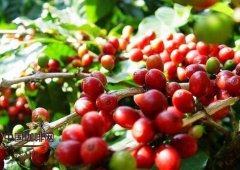
Costa Rica San Roman washing plant coffee beans cooked beans representative of Central and South America
The best coffee in Costa Rica seems to come from small processing plants, spread across several major coffee producing areas, including Tarazu and the western valley. This so-called coffee revolution originated 15 years ago and has greatly changed the way bean baking experts and importers think about Costa Rican coffee. Take the processing plant as the center, collect coffee beans from the surrounding small farms for processing, most of these farms are small societies